High-Index Lenses: 1.56 vs 1.61 vs 1.67 vs 1.74, and Which One You Need
The index is the number you pick for lens thickness. A higher index bends light more, so the lens can be thinner for the same prescription. Here’s how to choose, using the rule our lens tool follows and what each option costs.
By the Clearborne Team · Updated November 4, 2026
What the Index Number Means
Every prescription lens is a curve. The stronger your prescription, the more the lens has to bend light, and the thicker it gets. A high-index material bends light more, so it gets to the same power with less material.
At Clearborne you can pick 1.56, 1.61, 1.67 or 1.74. 1.56 is the standard. Each step up is thinner and lighter than the one before it, and costs more.
With a mild prescription the difference is small. The gap shows up as the numbers on your prescription get bigger.
Which Index Fits Your Prescription
Find the SPH number for each eye on your prescription. Take the stronger one and ignore the plus or minus sign. Our lens tool suggests an index from that one number:
- Under 6.00: 1.61. 1.56 also works for mild prescriptions and costs the least.
- 6.00 up to 8.00: 1.67.
- 8.00 and over: 1.74.
It’s a suggestion, not a lock. You can pick a thinner or thicker index. If the one you pick doesn’t suit your prescription, we contact you before your lenses are made.
SPH alone sets the suggestion. If you also have a high CYL number, one edge of the lens will be thicker than the other. An optician can tell you whether a thinner index is worth it for your pair.
What Each Index Costs at Clearborne
Clear single-vision lenses, per pair, as our lens tool prices them today:
| INDEX | PRICE | SUGGESTED FOR |
|---|---|---|
| 1.56 | $10.00 | Mild prescriptions |
| 1.61 | $20.00 | SPH under 6.00 |
| 1.67 | $40.00 | SPH 6.00 up to 8.00 |
| 1.74 | $60.00 | SPH 8.00 and over |
These are for clear lenses. Blue light filtering, photochromic, tints and progressives cost more, and not every lens type comes in every index. The lens tool shows the exact price before you pay. Every lens is anti-reflective and scratch-resistant.
What Changes Besides Thickness
- Weight. Thinner lenses use less material, so they’re lighter. You feel it most with a strong prescription in a bigger frame.
- Reflections. The higher the index, the more light the lens surface reflects. That’s one reason an anti-reflective coating matters more on thin lenses, and why every Clearborne lens has one.
- Price. Each step up costs more. Check the table above before you go thinner than you need.
Your Frame Matters as Much as the Lens
With a minus prescription (nearsighted), the lens is thinnest in the middle and thickest at the edge. The wider the lens, the thicker that edge gets. With a plus prescription (farsighted), it’s the center that grows, and a smaller lens keeps it thinner too.
So with a strong prescription, a narrower lens width does as much as a higher index. A full-rim frame also hides part of the edge. A rimless frame shows all of it.
The lens width is the first of the three numbers printed inside the temple arm, like 50-18-140.
Progressive lenses need enough lens height for the reading zone, so check the frame’s lens height before you go very small.
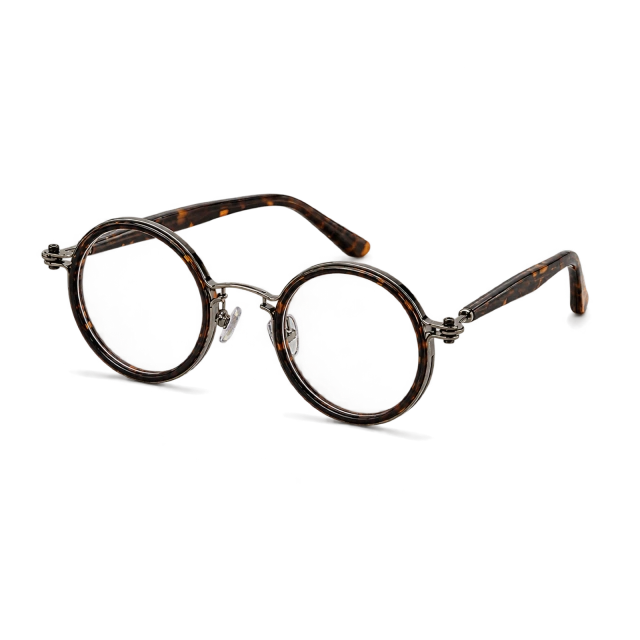
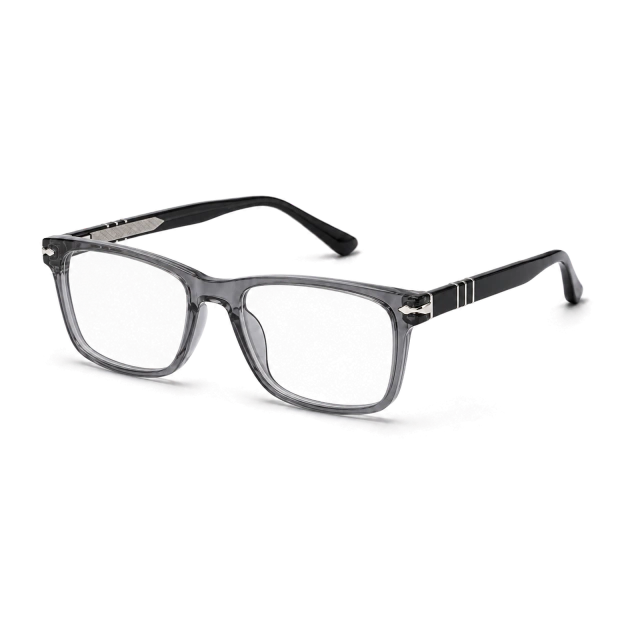
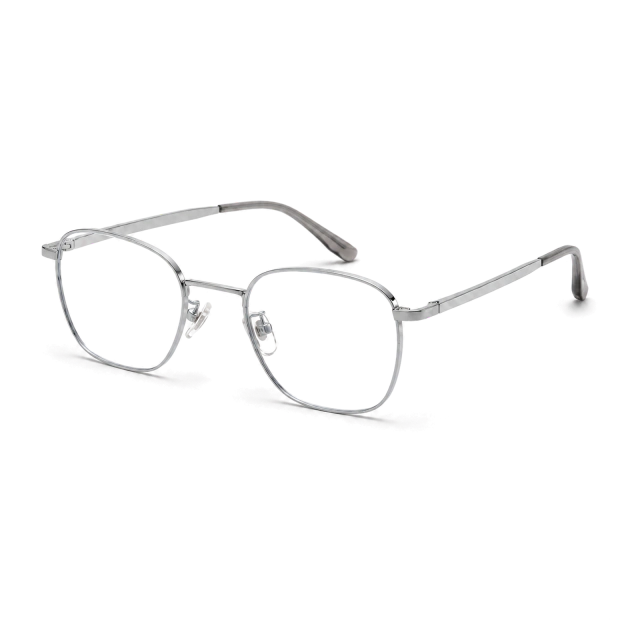
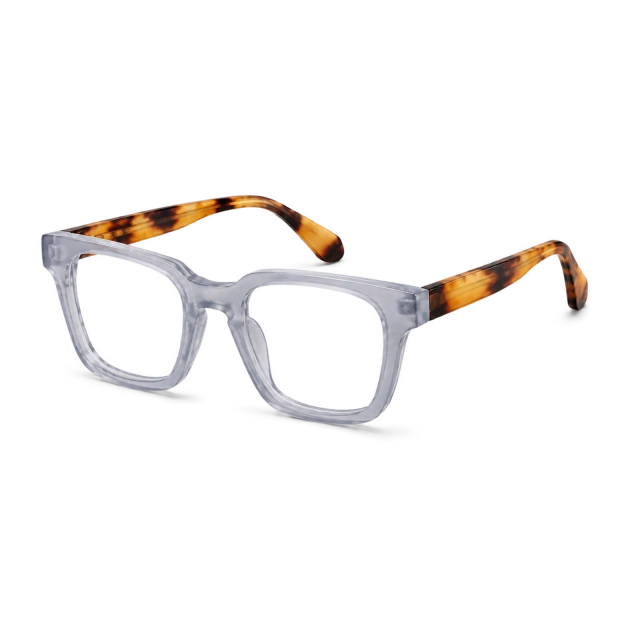
Our Eyeglasses With the Smallest Lenses
These full-rim frames have the narrowest lens widths we sell, from 46 to 48 mm. Veyra, for example, measures 46-27-150: lens width, bridge and temple length in millimeters.
If You Pick the Wrong One
A partner lab reviews every prescription order before the lenses are made. If the index you chose doesn’t suit your prescription, we email you before going ahead.
Prescription lenses are made for you, and you can still return or exchange them within 30 days, even if you entered the wrong prescription. For an exchange, we make the new pair once your return arrives, and charge or refund any price difference.
Common Questions
1.56 vs 1.61 lenses: which should I get?
Under 6.00 SPH our lens tool suggests 1.61: thinner and lighter for the price difference in the table above. With a mild prescription, 1.56 does the job and costs the least.
Is 1.67 worth it over 1.61?
Under 6.00 SPH, 1.61 is usually thin enough, and it’s what our lens tool suggests. 1.67 gets you a little thinner and lighter for the price difference in the table above. From 6.00 up, 1.67 is the one we suggest.
Do I need high-index lenses for a weak prescription?
No. With a mild prescription the lens is thin in any index, and 1.56 works and costs the least.
Are high-index lenses heavier?
No, lighter. The same power with less material means less weight.
Does a higher index make my vision sharper?
No. The index changes thickness and weight. Your prescription sets how well you see.