Glasses for Small Faces: How to Find Frames That Fit a Narrow Face
If your glasses keep sliding down your nose or stick out past the sides of your face, the frame is too big for you. Most frames are cut for an average face, so a narrow one has to look a little harder. It helps to know which numbers to read. Below: how to spot a frame that’s too big, the sizes to compare, and the narrowest frames we sell.
By the Clearborne Team · Updated November 10, 2026
Signs a Frame Is Too Big
- You push them back up your nose all day.
- There’s a gap between the arms and the sides of your head.
- The front sticks out past your face on both sides.
- Your eyes sit near the inner edge of each lens, by your nose, instead of near the middle.
- The arms run on past your ears, and the frame slides forward when you look down.
The Numbers to Check
Look inside one arm of a pair that fits you. You’ll usually see numbers like 52 □ 18 145: lens width, bridge and temple length, in millimeters. Match them to a Clearborne frame within ±2 mm and the fit will feel familiar. On a small face, these are the ones to watch:
- Front width, temple to temple. This one matters most, and our size guide calls anything under 132 mm narrow. It isn’t printed on the arm, so look for it on each product page as the frame’s size.
- Lens width. Most adult frames are 48–56 mm, and our size guide says lower reads petite.
- Bridge. A narrower bridge keeps a frame from sliding, as long as it doesn’t pinch your nose.
- Temple length. Most adult arms are 140–150 mm. Too long, and the frame slides forward.
No pair to compare? Stand at a mirror, hold a ruler across your face at eye level and read it from temple to temple. Frames within a few millimeters of that number are a good place to start.
Our Narrowest Frames
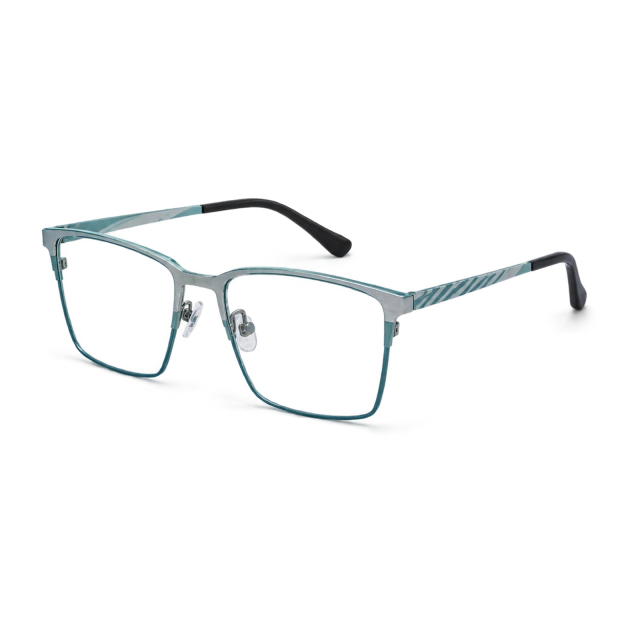
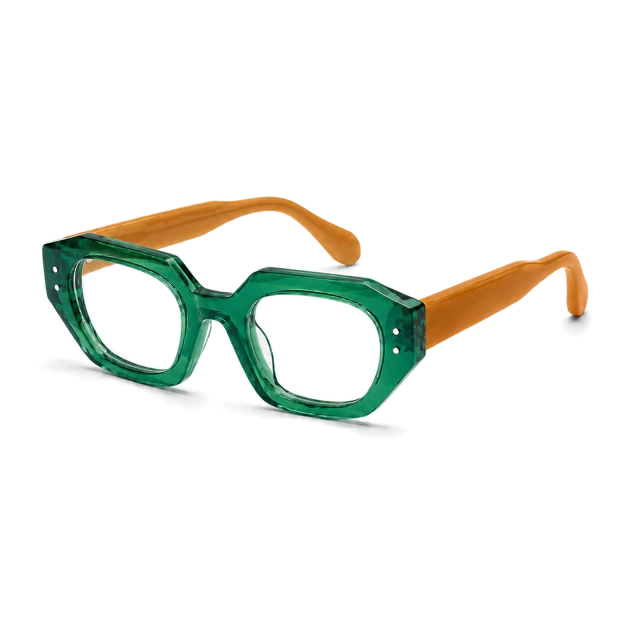
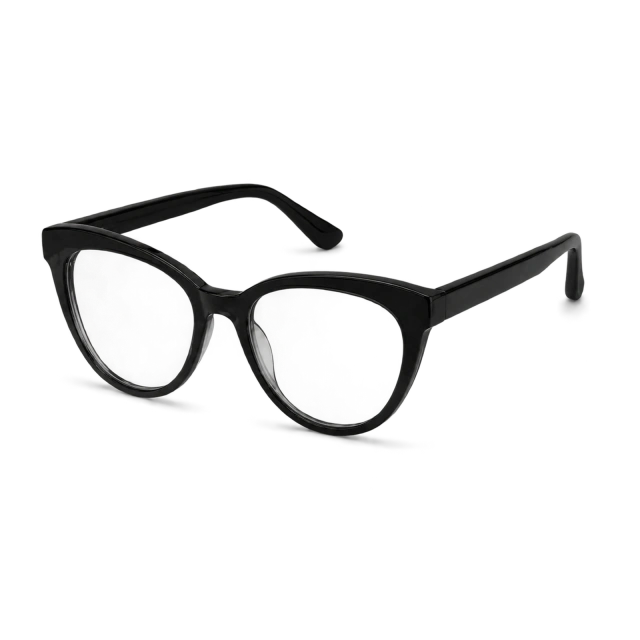
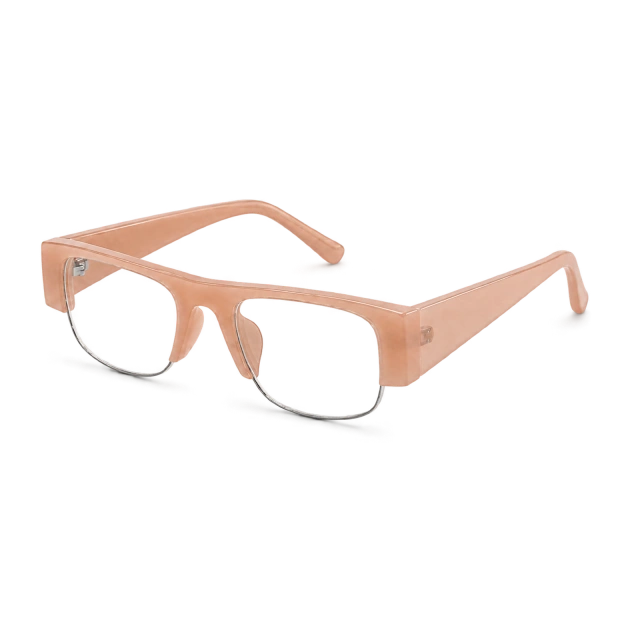
Measured across the front, these run 128–130 mm. Laser, for example, is 128 mm across, with 49 mm lenses, a 19 mm bridge and 145 mm temples.



Small Frames and a Strong Prescription
Here a small face has the advantage. If you’re very nearsighted, your lenses are thickest at the edge, and a smaller lens has thinner edges. So a narrow frame with small lenses keeps a strong prescription slimmer and lighter. Our high-index guide shows what each thinner lens costs.
Enter Your Own PD
PD, the distance between your pupils, tells us where to center each lens. The lens screen starts at 63 mm, but most adults measure anywhere from 54 to 74 mm, so that starting number may not be yours. Enter your own. Our PD guide shows how to measure it with a ruler and a mirror.
If the Size Is Right but They Still Slide
A frame that’s narrow enough can still slip if the bridge is too wide for your nose. Check the bridge number next, and see our low nose bridge guide. An optician can also bend the arms, or the nose pads if the frame has them, so it holds.
Shapes for a Smaller Face
Get the size right, then pick the shape. For narrow fits, our size guide suggests compact rectangles or small rounds. Past that, which shape suits you depends on your face shape more than on how small your face is.
Not sure what shape your face is? Our free face shape detector reads one photo and suggests frame shapes.
Buying Online: A Quick Checklist
- Get your number from a pair that fits, or from a ruler across your face.
- Shortlist frames under 132 mm, then compare lens width and temple length on each product page.
- Check the bridge if glasses tend to slide on you.
- Enter your own PD on the lens screen.
If They Don’t Fit
Prescription lenses are made for you, and you can still return or exchange them within 30 days, even if you entered the wrong prescription. For an exchange, we make the new pair once your return arrives, and charge or refund any price difference.
Common Questions
What size glasses fit a small face?
Start with the front width. Our size guide calls under 132 mm narrow. Then look for lenses toward the low end of the usual 48–56 mm and arms that end just behind your ears.
How do I know if my glasses are too big?
They slide down your nose, stick out past the sides of your face, or leave a gap between the arms and your head.
Are small frames better for a strong prescription?
Often, yes. If you’re nearsighted, a smaller lens has thinner edges, so a strong prescription looks slimmer and weighs less.
Where do I find a frame’s width on Clearborne?
In the description on each product page. The Size line gives the band and the front width in millimeters; lens width, bridge, temple and lens height follow a few lines below.