How Should Glasses Fit? A Mirror Check and the Numbers Behind It
You can usually tell within an hour. A red dent on your nose. A frame you keep nudging up with one finger. Arms that squeeze behind your ears by lunch. Most of that shows up in a mirror at home. The thing to get right before you order is the size: most frames can be adjusted a little, but none can be made wider or narrower. So here’s the mirror check, the numbers behind it, and how the frames we sell break down by width.
By the Clearborne Team · Updated November 11, 2026
The Mirror Check
Put them on, relax your face and look straight ahead. Then go through these one at a time.
- Eyes: across the width of the frame, each eye sits roughly in the middle of its lens. If both crowd toward your nose, the frame is probably too wide for you.
- Sides: the front lines up with the sides of your face. No wide gap at your temples, and no hinges pressing in.
- Nose: the bridge rests without gaps and doesn’t pinch. Take them off after an hour. A faint mark is normal; a deep red dent isn’t.
- Ears: the arms run straight back and bend down just behind your ears. They shouldn’t dig in, and they shouldn’t hang on past your ears.
- Brows: the top edge usually looks best at or a little below your eyebrows.
- Lashes and cheeks: your lashes clear the lenses, and when you smile, your cheeks don’t push the frame up.
- Movement: nod a few times, then look down at your phone. The frame should still be where you left it.
Width Comes First
Front width is the number that matters most. It runs across the whole front, temple to temple, and decides whether a frame sits comfortably across your face or presses on your temples. Like lens size, it’s something no adjustment can change. Our size guide uses three bands: narrow under 132 mm, medium 132 to 142 mm, and wide over 142 mm. Here’s how the eyeglass styles we sell today split across them, counted from our catalog each time this page loads:
Narrow face? Our small-faces guide picks out our narrowest frames. Wide face? The wide-faces guide starts from the other end.
How to Find Your Width
Start with a pair you already like. The three small numbers inside one arm, lens, bridge and temple, are the ones to match within ±2 mm, and the fit will feel familiar. Front width usually isn’t among them, so put a ruler across the front of that pair and read it end to end. Then pick frames close to that number.
On a Clearborne product page, the Size line in the description gives the band and the front width, for example Medium (138mm). Lens width, bridge, temple and lens height follow a few lines below. We measure them by hand, so allow a millimeter or so either way.
No old pair that fits? Hold a ruler level across your face in a mirror, at eye height, from one temple to the other. It’s rough, but it gives you a number to start from.
Lenses: Where Your Eyes Should Sit
Lens width and bridge together decide where your eyes land in each lens and how big the frame looks on you. Most adult frames run 48–56 mm per lens, and our size guide says the low end reads petite and the high end reads oversized.
Where your prescription sits inside each lens comes from your PD, the gap between your pupils. The lens screen starts at 63 mm, but most adults measure anywhere from 54 to 74 mm, so swap in your own number before you check out. A ruler and a mirror are enough to measure it.
The Bridge
The bridge is the gap between the lenses that rests on your nose. Our size guide keeps it short: wider suits a wider nose, and a narrower bridge keeps the frame from sliding, as long as it doesn’t pinch.
Right width but still sliding? Check the bridge before anything else. Our low nose bridge guide goes into it.
Arms and Temple Length
The arms should clear your ears and curve down just behind them. Most adult temples are 140–150 mm. Too short and they pinch behind the ear; too long and the frame creeps forward every time you look down.
If You Wear Progressives
Progressives stack three zones in one lens: distance at the top, middle in between, reading at the bottom. That takes height. Our size guide’s line is about 35 mm or more, and here’s how many of our frames clear it:
A Safe Place to Start
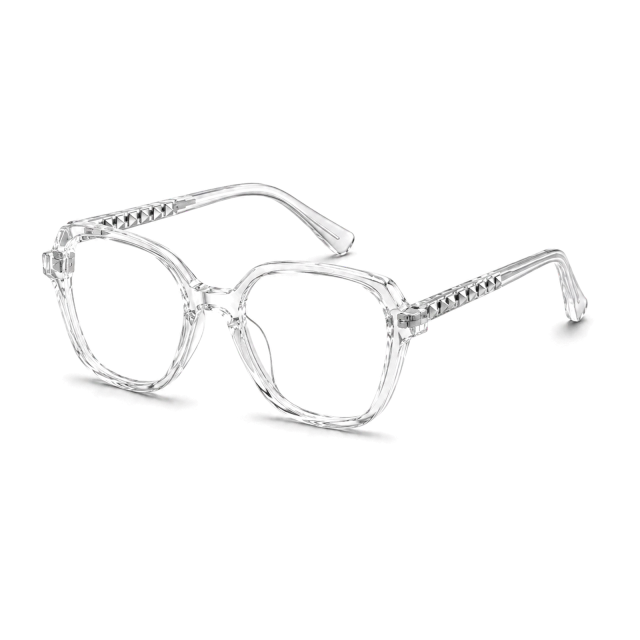
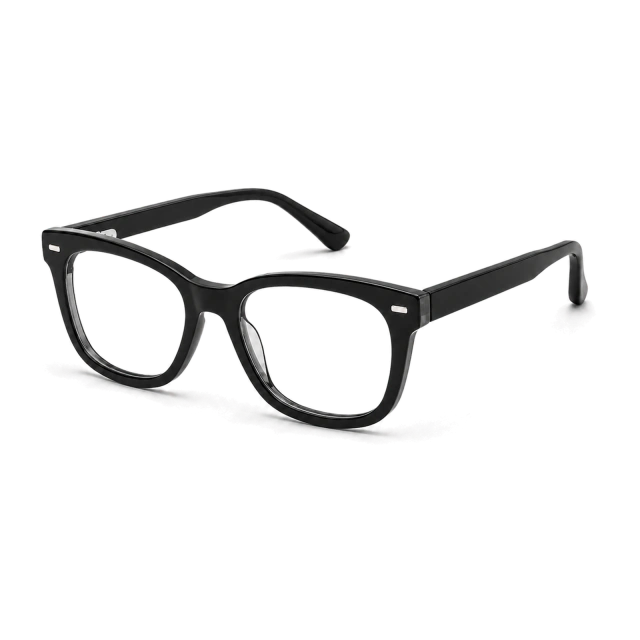
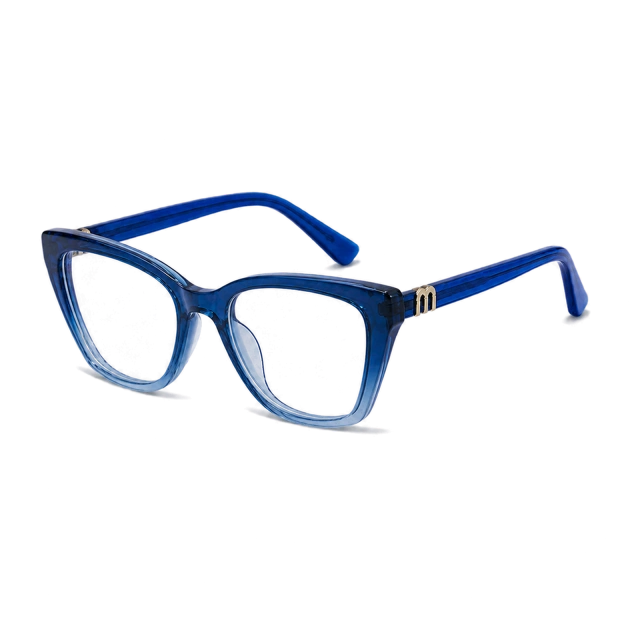
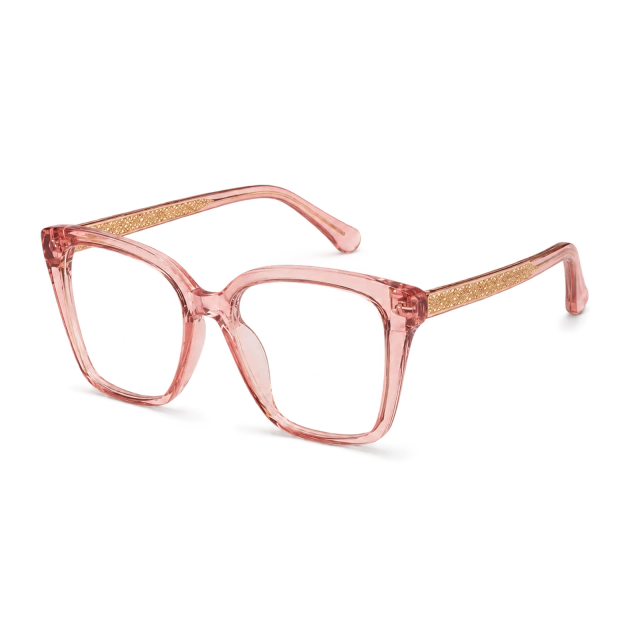
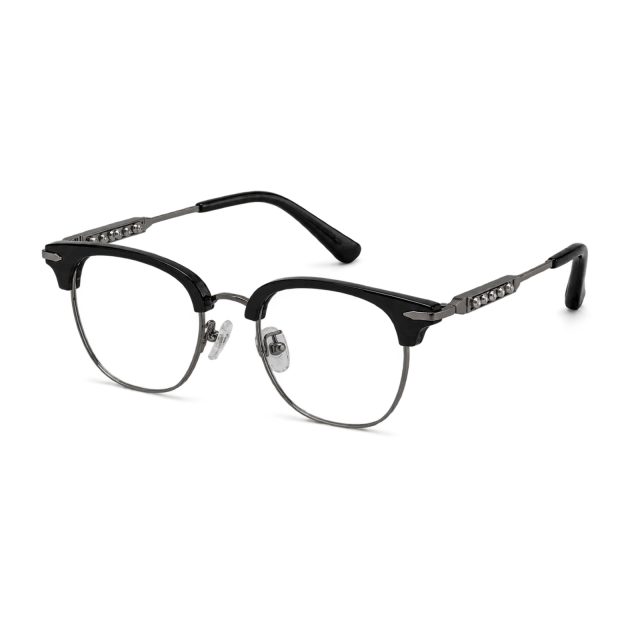
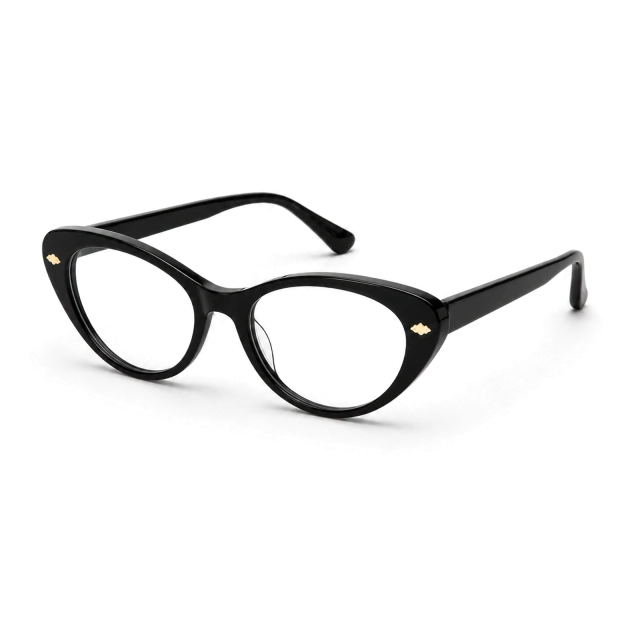
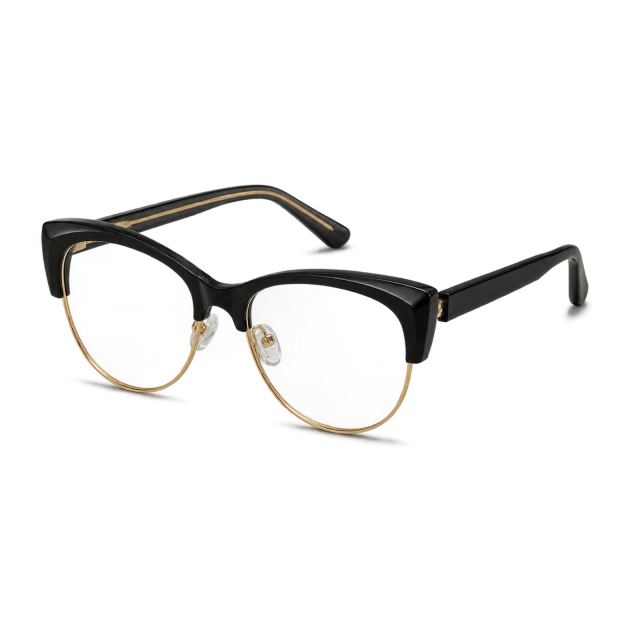
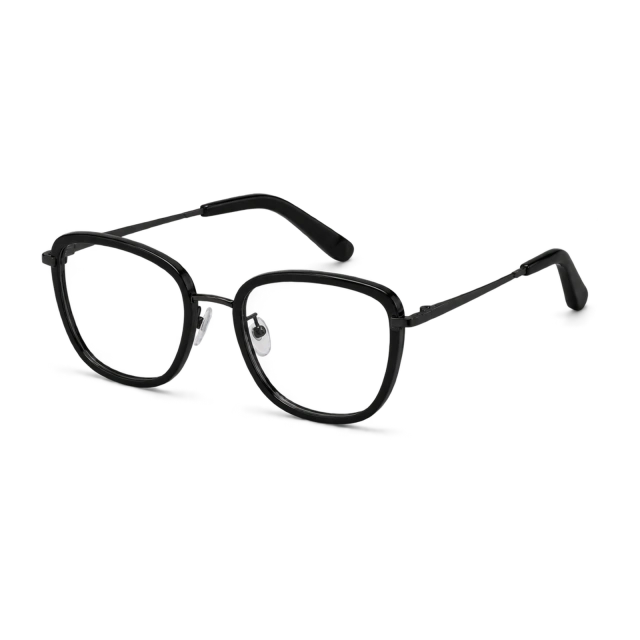
No pair to compare and no ruler handy? Start in the middle. Every number on these falls inside the common ranges, with the front and lenses near the middle: 138–140 mm across, 50–54 mm lenses, a 17–20 mm bridge and 140–150 mm arms. Take Drizzle: 138 mm across, 53 mm lenses, a 17 mm bridge and 145 mm temples.
What an Optician Can Fix, and What They Can’t
A lot of small fit problems can be adjusted. A local optician can bend the arms so they grip behind your ears, level a frame that sits crooked, and move the nose pads on frames that have them.
What no amount of bending fixes: a front that’s too wide or too narrow, lenses too big or too small for your face, or a bridge far off the shape of your nose. That’s why a minute with the numbers above pays off before you order.
Size sorted and still stuck on shape? Our free face shape detector can read one photo and suggest frame shapes for your face.
The First Few Days
New frames can feel odd for a few days. If they’re still sliding, pinching or leaving dents after that, the frame itself doesn’t fit. If your vision seems off, that’s a question for the eye doctor who wrote your prescription.
If They Don’t Fit
Prescription lenses are made for you, and you can still return or exchange them within 30 days, even if you entered the wrong prescription. For an exchange, we make the new pair once your return arrives, and charge or refund any price difference.
Common Questions
How do I know if my glasses fit correctly?
They sit level, your eyes land near the middle of each lens, nothing presses at your temples, nose or ears, and they stay put when you look down.
Should glasses touch your cheeks?
No. If the frame rests on your cheeks, especially when you smile, it’s sitting too low. A bridge too wide for your nose or lenses too tall for your face are the usual reasons.
Where should glasses sit on your eyebrows?
Usually at or just below your brows, so the top edge doesn’t cover them.
Can glasses be adjusted to fit better?
Partly. A local optician can adjust the arms, and the nose pads on frames that have them. The width of the front and the size of the lenses can’t be changed.
Where do I find a frame’s size on Clearborne?
Each product page’s description has a Size line with the band and the front width, such as Medium (138mm). The other four numbers, lens width, bridge, temple and lens height, sit a few lines further down.