How to Tighten Glasses at Home: Screws, Arms and Nose Pads
Glasses rarely loosen all at once. A hinge screw backs out a quarter turn, the arms spread from being pulled off with one hand, or the nose pads drift apart. Most of that you can fix at your kitchen table with a little care. A few jobs are better left to an optician. Here’s how to tell which you have, and how to fix it without making it worse.
By the Clearborne Team · Updated November 12, 2026
First, Find What’s Loose
Hold the front still and gently move each arm. Then put the glasses on and tip your head down, the way you would to read.
- An arm wobbles or clicks at the hinge: a loose hinge screw.
- The hinges feel firm, but the frame slides forward when you look down: the arms have opened up, or they don’t bend down enough behind your ears.
- On a frame with nose pads, it sits lower than it used to, or the lenses touch your cheeks: the pads have spread apart.
- The frame sits crooked: an arm got bent, or your ears sit at slightly different heights. Leave that one to an optician.
Bought the frame from us? Email us a photo before you try a repair or take it to another shop, and we’ll reply with what to do.
Tighten a Loose Hinge Screw
You need the tiny screwdriver from an eyeglass repair kit. A knife tip slips and scratches. Work over a towel, so a dropped screw doesn’t roll away.
- Open the arm fully and hold the hinge between your finger and thumb.
- Turn the screw clockwise until it’s snug, then stop. Overtightening strips the thread or makes the arm stiff to open.
- Open and close the arm a few times. It should move smoothly and stay where you put it.
If the screw is missing, a repair kit or an optical shop has spares. If it keeps backing out, an optician can fit a self-locking screw or add a drop of thread-locker. Don’t try glue or nail polish at home: their solvents can mark plastic frames and lens coatings, and glue makes the next repair harder.
Some frames have spring hinges, which let the arms flex outward. Their screws tighten the same way. If the spring itself has gone weak, that isn’t a screw job, so leave it to an optician.
Arms That Slip Off Your Ears
Behind each ear, the arm should curve down and hug the back of the ear. If your glasses slide forward when you tip your head down, the curve usually needs to start a little closer to your ear, or drop a little more.
- Metal arms: hold the arm just in front of the bend, and press the tip down a few degrees with your other hand. Small steps, then try them on. If the tip has a plastic sleeve, warm the sleeve a little first, as below.
- Plastic arms: cold plastic can crack when you bend it. Opticians warm it first with a frame warmer. At home, a hair dryer on a warm setting, aimed at the tip of the arm for about half a minute, can soften it a little. If the arm doesn’t give easily, stop and let an optician do it. Keep the heat away from the lenses, because it can damage their coating.
- Bend both arms the same amount, then check in a mirror that the frame sits level.
If the curve lands past your ear and can’t be brought close enough, the arms may simply be too long for you. Our size guide puts most adult arms at 140–150 mm, and notes that arms too long slide forward while arms too short pinch.
Arm length, listed as Temple on our product pages, is the last of the three numbers printed inside an arm, like the 145 in 52-18-145. Find it on a pair that stays put and compare. Shorter arms usually come on narrower fronts, so check the front width against that pair too.
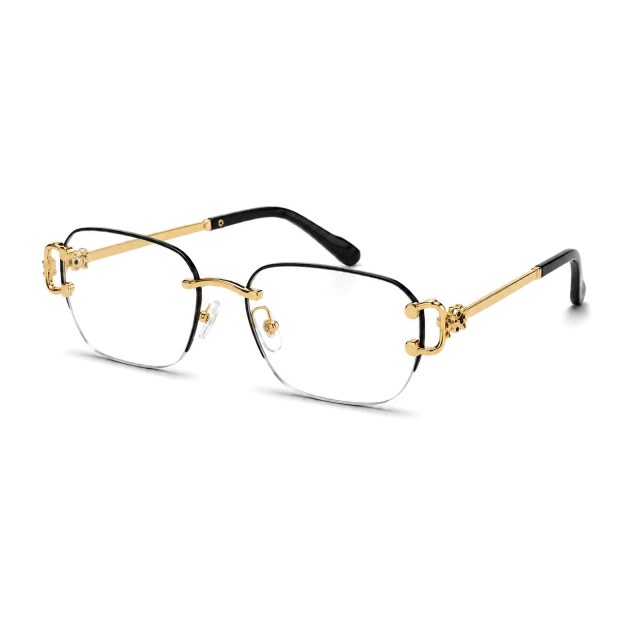
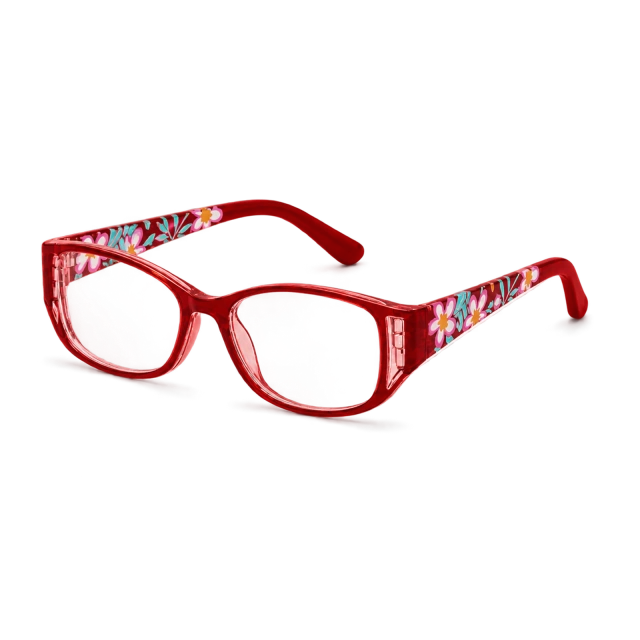
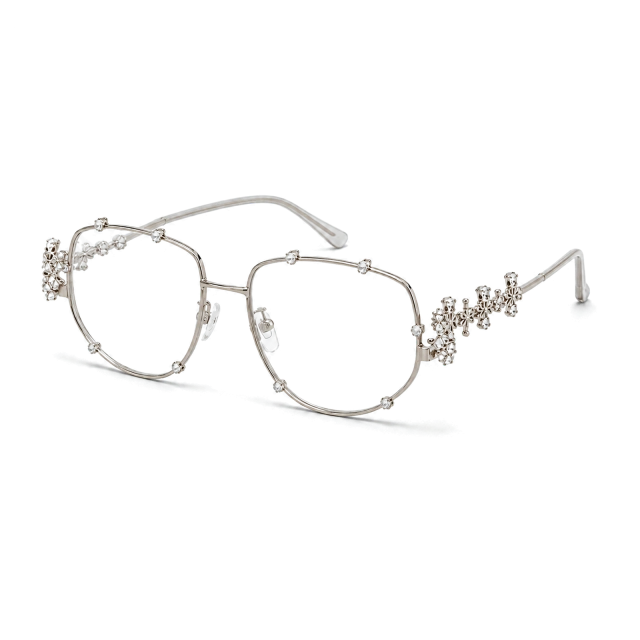
Frames With Shorter Arms
These frames have arms under 140 mm, 131–136 mm, shortest first. OKeeffe, for example, measures 53-15-131 and is 140 mm across.




Nose Pads
Metal frames, and some plastic ones, rest on two small pads on thin metal stems.
- Frame sits too low: push both pads a little closer together, the same amount on each side. Closer pads lift the frame.
- Frame sits too high or pinches your nose: spread the pads a little.
- Pads that have gone hard or yellow can be swapped for new ones at an optical shop.
Plastic frames with the bridge molded into the front have no pads to adjust. If one of those slides, the bridge is probably too wide for your nose, and our low nose bridge guide explains what to look for instead.
Leave These to an Optician
- Rimless frames. The screws go through the lenses, and too much force cracks a lens.
- A stripped screw, a cracked hinge, or an arm that has broken off.
- A frame that sits crooked.
- Anything you’d have to force.
Many optical shops will adjust a frame you bought somewhere else, but not all of them, so call ahead and ask.
Keep Them Tight Longer
- Take them off with two hands. Pulling on one arm loosens the hinge and spreads the arms.
- Don’t push them up onto your head. That spreads the arms too.
- Fold them before you set them down, and keep them in their case.
- Check the hinge screws every few months, before one works all the way out.
Common Questions
How do I tighten my glasses at home?
Find what’s loose first. A wobbly hinge needs its screw turned until snug with an eyeglass screwdriver. Arms that slip need a small bend behind the ear, after warming plastic arms. If the frame sits low, nose pads can be pushed a little closer together. Rimless frames are best left to an optician.
Why do my glasses keep getting loose?
Opening and closing works hinge screws loose over time, and pulling glasses off with one hand spreads the arms. If they still slide when everything is tight, check the bridge first: one too wide for your nose lets the frame drop. Arms that curve down past your ear can let it slide too.
Can I tighten glasses without a screwdriver?
Not the hinge screw. A knife tip or a coin slips and scratches the frame. You can still bend metal arms or nose pads a little by hand, and an eyeglass repair kit costs little at most drugstores.
Should I put glue or nail polish on a loose screw?
Not at home. Their solvents can mark plastic frames and lens coatings, and glue makes the next repair harder. An optician can fit a self-locking screw or add a drop of thread-locker instead.
Will an optician adjust glasses I bought online?
Many will. Call ahead and ask, and bring the glasses with you.